Rekursionen in AArch64
2026-07-23T17:57:11+08:00
Grundmuster
Beginnen wir mit einem C-Programm, das eine einfache Fibonacci-Funktion enthält.
#include <stdint.h>
#include <stdio.h>

uint64_t fibonacci(uint32_t index)
{
    if (index <= 1) return 1;
    else return fibonacci(index - 1) + fibonacci(index - 2);
}

int main()
{
    uint32_t i;
    scanf("%u", &i);
    printf("%lu", fibonacci(i));
    return 0;
}
Kompilieren Sie es:
$ gcc fibo.c -o fibo0
Standardmässig führt GCC überhaupt keine Optimierung durch. Öffnen Sie Ihr schickes iaito und gehen Sie zur Funktion main:
64: int main (int argc, char **argv, char **envp);
afv: vars(3:sp[0x4..0x20])
0x00000878      stp      x29,    x30,    [var_20h]!
0x0000087c      mov      x29,    sp
0x00000880      add      x0,     sp,     0x1c
0x00000884      mov      x1,     x0
0x00000888      adrp     x0,     0
0x0000088c      add      x0,     x0,     0x8d8
0x00000890      bl       sym.imp.__isoc23_scanf
0x00000894      ldr      w0,     [var_1ch]
0x00000898      bl       sym.fibonacci
0x0000089c      mov      x1,     x0
0x000008a0      adrp     x0,     0
0x000008a4      add      x0,     x0,     0x8e0 ; const char *format
0x000008a8      bl       sym.imp.printf ; int printf(const char *format)
0x000008ac      mov      w0,     0
0x000008b0      ldp      x29,    x30,    [sp],   0x20
0x000008b4      ret
Hier sehen Sie einen Aufruf von sym.fibonacci bei 0x0000898. Öffnen Sie diese Funktion und betrachten Sie den Graphen:
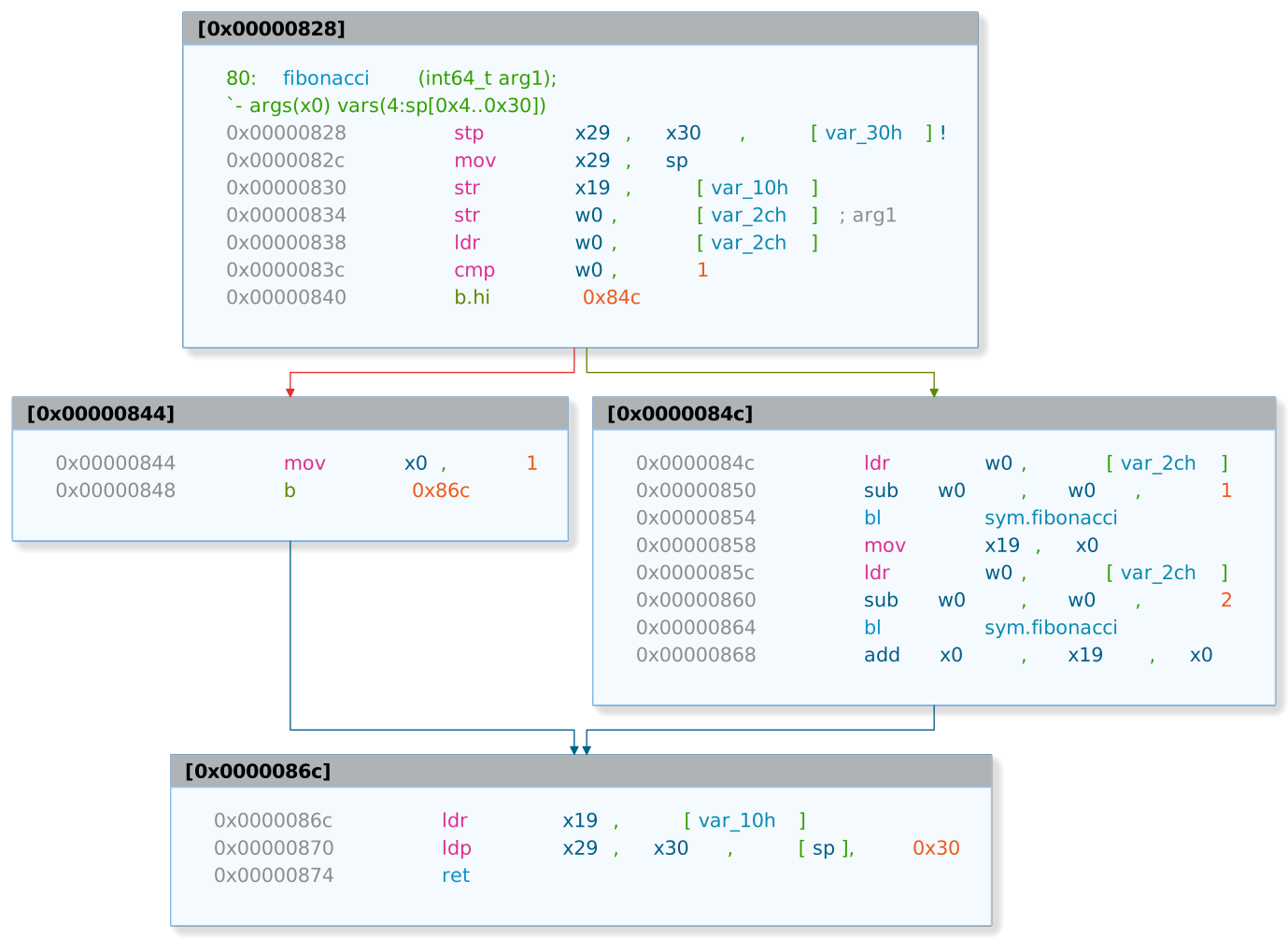
Sie werden sehen, dass sich sym.fibonacci bei 0x0000854 und 0x0000864 jeweils selbst aufruft.
Wenn Sie die Symbole entfernt haben, sehen Sie sym.fibonacci nicht mehr, aber Sie werden hier trotzdem etwas wie bl fcn.00000828 sehen. Solche Muster, bei denen Funktionen sich selbst aufrufen, weisen auf Rekursion hin.
Optimierung
Ersetzen wir die Fibonacci-Funktion durch eine Fakultätsfunktion:
#include <stdint.h>
#include <stdio.h>

uint64_t fact(uint32_t index)
{
    if (index <= 1) return 1;
    else return index * fact(index - 1);
}

int main()
{
    uint32_t i;
    scanf("%u", &i);
    printf("%lu", fact(i));
    return 0;
}
Kompilieren Sie es:
$ gcc fact.c -o fact0
Beim Öffnen in iaito erhalten Sie eine main-Funktion, die sym.fact aufruft:
64: int main (int argc, char **argv, char **envp);
afv: vars(3:sp[0x4..0x20])
0x0000086c      stp      x29,    x30,    [var_20h]!
0x00000870      mov      x29,    sp
0x00000874      add      x0,     sp,     0x1c
0x00000878      mov      x1,     x0
0x0000087c      adrp     x0,     0
0x00000880      add      x0,     x0,     0x8d0 ; "%u"
0x00000884      bl       sym.imp.__isoc23_scanf
0x00000888      ldr      w0,     [var_1ch]
0x0000088c      bl       sym.fact ; sym.fact(0x0)
0x00000890      mov      x1,     x0
0x00000894      adrp     x0,     0
0x00000898      add      x0,     x0,     0x8d8 ; const char *format ; "%lu"
0x0000089c      bl       sym.imp.printf ; int printf(const char *format)
; int printf("%lu")
0x000008a0      mov      w0,     0
0x000008a4      ldp      x29,    x30,    [sp],   0x20
0x000008a8      ret
Die Disassemblierung der aufgerufenen Funktion sym.fact lautet:
68: fact (int64_t arg1);
`- args(x0) vars(4:sp[0x4..0x30])
0x00000828      stp      x29,    x30,    [var_30h]!
0x0000082c      mov      x29,    sp
0x00000830      str      x19,    [var_10h]
0x00000834      str      w0,     [var_2ch] ; arg1
0x00000838      ldr      w0,     [var_2ch]
0x0000083c      cmp      w0,     1
0x00000840      b.hi     0x84c ; unlikely
0x00000844      mov      x0,     1
0x00000848      b        0x860
0x0000084c      ldr      w19,    [var_2ch]
0x00000850      ldr      w0,     [var_2ch]
0x00000854      sub      w0,     w0,     1
0x00000858      bl       sym.fact ; sym.fact(-1)
0x0000085c      mul      x0,     x19,    x0
0x00000860      ldr      x19,    [var_10h]
0x00000864      ldp      x29,    x30,    [sp],   0x30
0x00000868      ret
und auch der Graph davon:
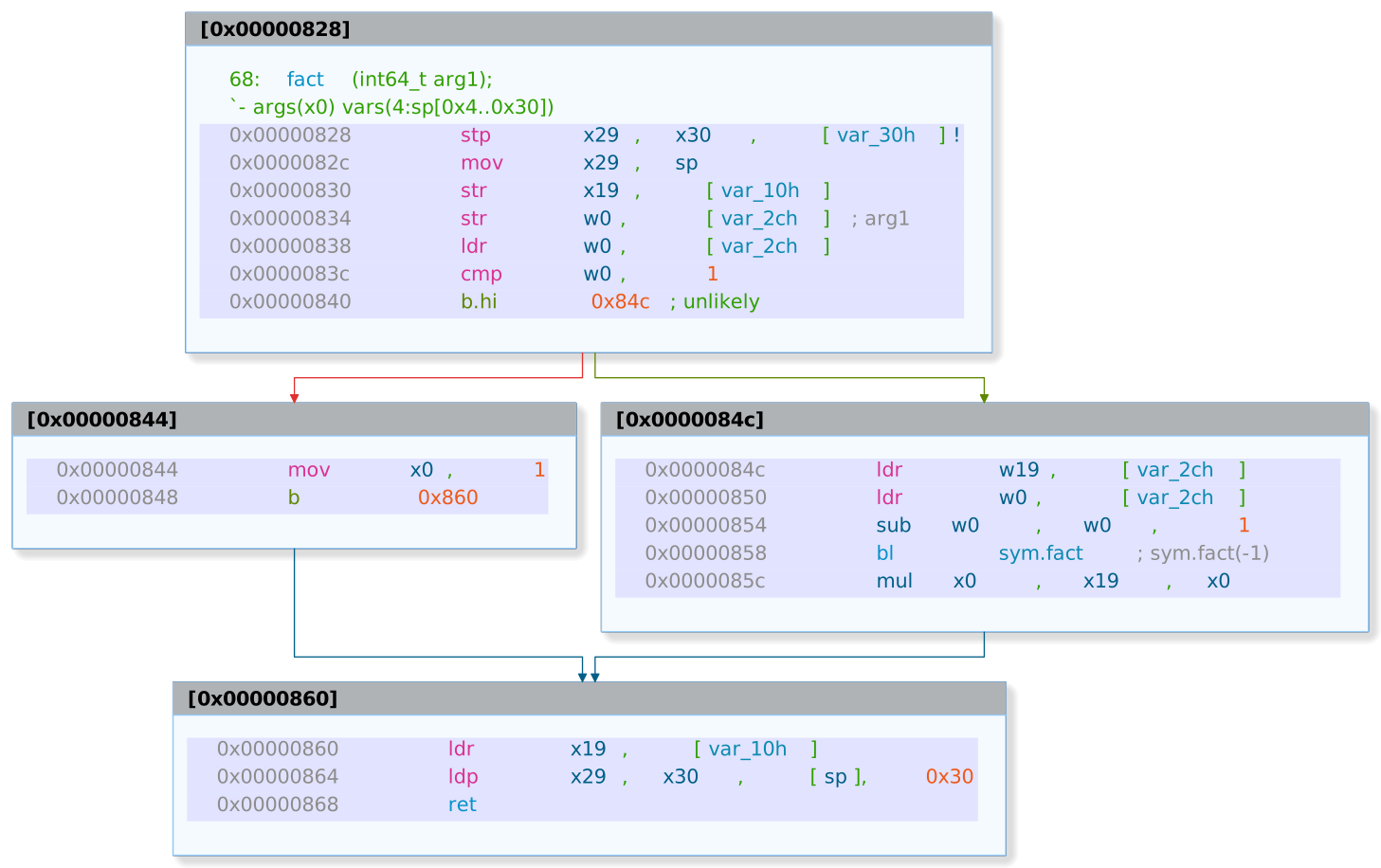
Was passiert also, wenn wir die Optimierung einschalten? Versuchen wir es:
$ gcc fact.c -O2 -o fact2
Öffnen Sie es in iaito und untersuchen Sie die Funktion main. Sie werden Folgendes sehen:
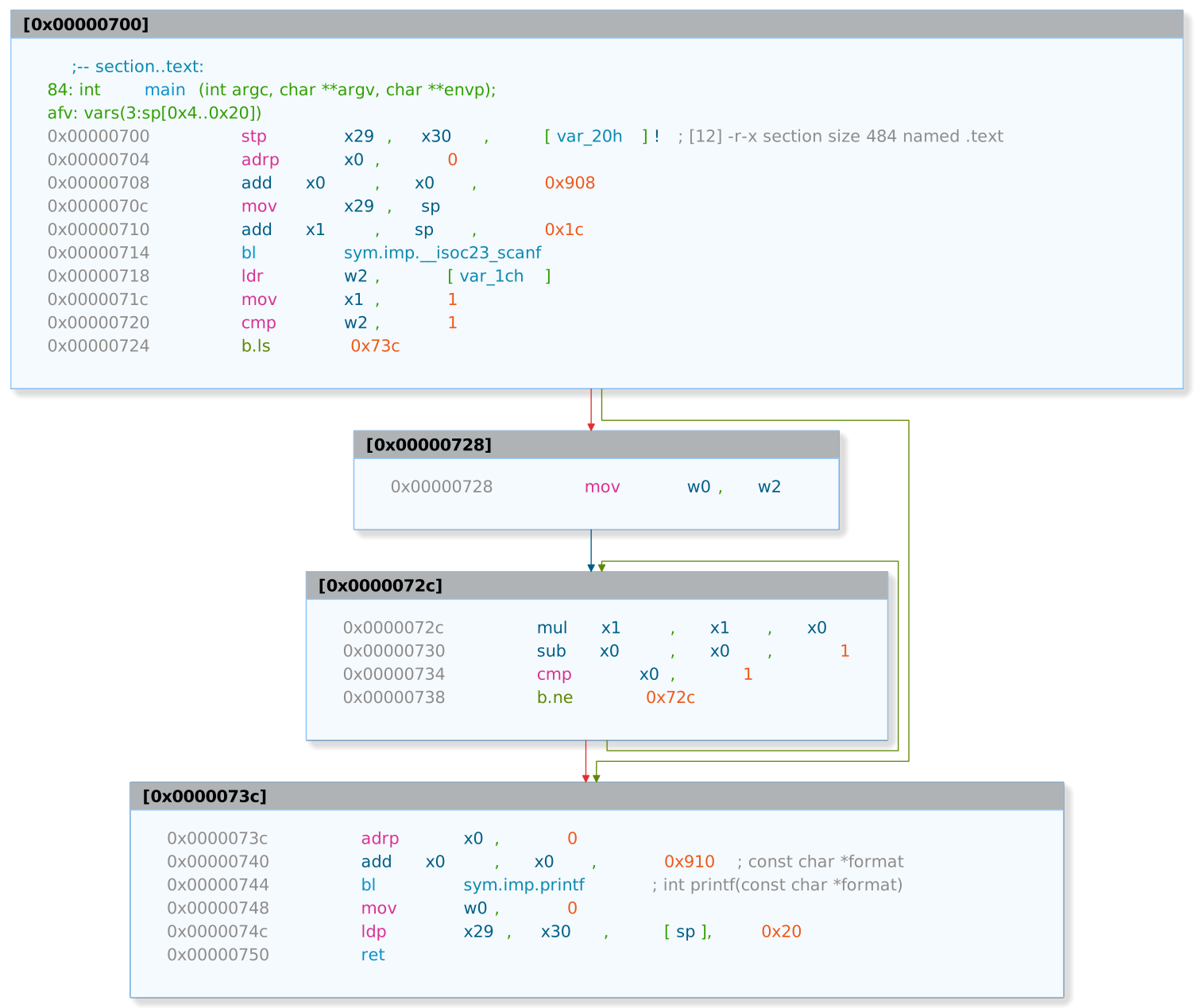
Die Anweisung, die sym.fact aufruft, ist verschwunden. Stattdessen sehen Sie eine Schleife innerhalb der Funktion main, die die Arbeit erledigt.
Gehen Sie zurück zu dem C-Code mit unserer Fibonacci-Funktion, kompilieren Sie ihn mit aktivierter Optimierung, und untersuchen Sie die Funktion main:
  ;-- section..text:
60: int main (int argc, char **argv, char **envp);
afv: vars(3:sp[0x4..0x20])
0x00000700      stp      x29,    x30,    [var_20h]! ; [12] -r-x section size 1176 named .text
0x00000704      adrp     x0,     0
0x00000708      add      x0,     x0,     0xbb8 ; "%u"
0x0000070c      mov      x29,    sp
0x00000710      add      x1,     sp,     0x1c
0x00000714      bl       sym.imp.__isoc23_scanf
0x00000718      ldr      w0,     [var_1ch]
0x0000071c      bl       sym.fibonacci ; sym.fibonacci(0x0, 0x177ffc, 0x0, 0x0, 0x0, 0x0, 0x0, 0x0, 0x0)
0x00000720      mov      x1,     x0
0x00000724      adrp     x0,     0
0x00000728      add      x0,     x0,     0xbc0 ; const char *format ; "%lu"
0x0000072c      bl       sym.imp.printf ; int printf(const char *format)
0x00000730      mov      w0,     0
0x00000734      ldp      x29,    x30,    [sp],   0x20
0x00000738      ret
Die Anweisung, die sym.fibonacci aufruft, ist noch vorhanden.
Wenn Sie die Disassemblierung von sym.fibonacci öffnen, werden Sie die Raffinesse des Compilers zu schätzen wissen:
792: fibonacci (uint32_t arg1, int64_t arg_60h, int64_t arg_70h, int64_t arg_80h, int64_t arg_88h, int64_t arg_90h, int64_t arg_98h, int64_t arg_a0h, int64_t arg_a8h);
`- args(x0, sp[0x60..0xa8]) vars(27:sp[0x4..0xb0])
0x00000880      sub      w6,     w0,     1 ; arg1
0x00000884      mov      x1,     0
0x00000888      cmp      w0,     1 ; arg1
0x0000088c      b.ls     0xb68 ; likely
0x00000890      cmp      w6,     1
0x00000894      b.eq     0xb70 ; unlikely
0x00000898      sub      w10,    w6,     1
0x0000089c      mov      x3,     0
0x000008a0      mov      w7,     w10
0x000008a4      cmp      w7,     1
0x000008a8      b.eq     0xb4c ; unlikely
0x000008ac      sub      w11,    w7,     1
0x000008b0      mov      x4,     0
0x000008b4      mov      w8,     w11
0x000008b8      cmp      w8,     1
0x000008bc      b.eq     0xb30 ; unlikely
0x000008c0      sub      w12,    w8,     1
0x000008c4      mov      x5,     0
0x000008c8      mov      w9,     w12
0x000008cc      cmp      w12,    1
0x000008d0      b.eq     0xa98 ; unlikely
0x000008d4      stp      x29,    x30,    [var_b0h]!
0x000008d8      mov      x29,    sp
0x000008dc      stp      x19,    x20,    [var_10h]
0x000008e0      stp      x21,    x22,    [var_20h]
0x000008e4      stp      x23,    x24,    [var_30h]
0x000008e8      stp      x25,    x26,    [var_40h]
0x000008ec      stp      x27,    x28,    [var_50h]
0x000008f0      sub      w13,    w9,     1
0x000008f4      mov      w25,    w13
0x000008f8      mov      x20,    0
0x000008fc      cmp      w25,    1
0x00000900      b.eq     0xa90 ; unlikely
0x00000904      sub      w27,    w25,    1
0x00000908      mov      x19,    0
0x0000090c      mov      w26,    w27
0x00000910      cmp      w26,    1
0x00000914      b.eq     0x9fc ; unlikely
0x00000918      sub      w28,    w26,    1
0x0000091c      mov      x22,    0
0x00000920      mov      w2,     w28
0x00000924      cmp      w2,     1
0x00000928      b.eq     0x9dc ; unlikely
0x0000092c      sub      w15,    w2,     1
0x00000930      mov      x21,    0
0x00000934      mov      w24,    w15
0x00000938      cmp      w24,    1
0x0000093c      b.eq     0x9bc ; unlikely
0x00000940      mov      w23,    w24
0x00000944      mov      x14,    0
0x00000948      sub      w0,     w23,    1
0x0000094c      stp      x1,     x3,     [arg_60h]
0x00000950      sub      w23,    w23,    2
0x00000954      stp      x4,     x5,     [arg_70h]
0x00000958      stp      w6,     w10,    [arg_80h]
0x0000095c      str      x14,    [arg_88h]
0x00000960      stp      w7,     w11,    [arg_90h]
0x00000964      stp      w8,     w12,    [arg_98h]
0x00000968      stp      w9,     w13,    [arg_a0h]
0x0000096c      stp      w2,     w15,    [arg_a8h]
0x00000970      bl       sym.fibonacci ; sym.fibonacci(0x1d001efffffff8, 0x0, 0xfffffffa, 0x0, 0x0, 0x0, 0x0, -1, 0x0)
0x00000974      ldr      x14,    [arg_88h]
0x00000978      cmp      w23,    1
0x0000097c      ldp      x1,     x3,     [arg_60h]
0x00000980      add      x14,    x14,    x0
0x00000984      ldp      x4,     x5,     [arg_70h]
0x00000988      ldp      w6,     w10,    [arg_80h]
0x0000098c      ldp      w7,     w11,    [arg_90h]
0x00000990      ldp      w8,     w12,    [arg_98h]
0x00000994      ldp      w9,     w13,    [arg_a0h]
0x00000998      ldp      w2,     w15,    [arg_a8h]
0x0000099c      b.hi     0x948 ; likely
0x000009a0      add      x21,    x21,    1
0x000009a4      add      x21,    x21,    x14
0x000009a8      cmp      w24,    2
0x000009ac      b.eq     0x9c0 ; unlikely
0x000009b0      sub      w24,    w24,    2
0x000009b4      cmp      w24,    1
0x000009b8      b.ne     0x940 ; likely
0x000009bc      add      x21,    x21,    1
0x000009c0      add      x22,    x22,    1
0x000009c4      sub      w2,     w2,     2
0x000009c8      add      x22,    x22,    x21
0x000009cc      cmp      w15,    1
0x000009d0      b.eq     0x9e0 ; unlikely
0x000009d4      cmp      w2,     1
0x000009d8      b.ne     0x92c ; likely
0x000009dc      add      x22,    x22,    1
0x000009e0      add      x19,    x19,    1
0x000009e4      sub      w26,    w26,    2
0x000009e8      add      x19,    x19,    x22
0x000009ec      cmp      w28,    1
0x000009f0      b.eq     0xa00 ; unlikely
0x000009f4      cmp      w26,    1
0x000009f8      b.ne     0x918 ; likely
0x000009fc      add      x19,    x19,    1
0x00000a00      add      x20,    x20,    1
0x00000a04      sub      w25,    w25,    2
0x00000a08      add      x20,    x20,    x19
0x00000a0c      cmp      w27,    1
0x00000a10      b.ne     0x8fc ; likely
0x00000a14      add      x5,     x5,     1
0x00000a18      sub      w9,     w9,     2
0x00000a1c      add      x5,     x5,     x20
0x00000a20      cmp      w13,    1
0x00000a24      b.eq     0xa34 ; unlikely
0x00000a28      cmp      w9,     1
0x00000a2c      b.ne     0x8f0 ; likely
0x00000a30      add      x5,     x5,     1
0x00000a34      add      x4,     x4,     1
0x00000a38      sub      w8,     w8,     2
0x00000a3c      add      x4,     x4,     x5
0x00000a40      cmp      w12,    1
0x00000a44      b.eq     0xa64 ; unlikely
0x00000a48      cmp      w8,     1
0x00000a4c      b.eq     0xa60 ; unlikely
0x00000a50      sub      w12,    w8,     1
0x00000a54      mov      x5,     0
0x00000a58      mov      w9,     w12
0x00000a5c      b        0xa28
0x00000a60      add      x4,     x4,     1
0x00000a64      add      x3,     x3,     1
0x00000a68      sub      w7,     w7,     2
0x00000a6c      add      x3,     x3,     x4
0x00000a70      cmp      w11,    1
0x00000a74      b.eq     0xae4 ; unlikely
0x00000a78      cmp      w7,     1
0x00000a7c      b.eq     0xae0 ; unlikely
0x00000a80      sub      w11,    w7,     1
0x00000a84      mov      x4,     0
0x00000a88      mov      w8,     w11
0x00000a8c      b        0xa48
0x00000a90      add      x20,    x20,    1
0x00000a94      b        0xa14
0x00000a98      add      x5,     x5,     1
0x00000a9c      add      x4,     x4,     1
0x00000aa0      add      x4,     x4,     x5
0x00000aa4      sub      w8,     w8,     2
0x00000aa8      cmp      w12,    1
0x00000aac      b.ne     0x8b8 ; likely
0x00000ab0      add      x3,     x3,     1
0x00000ab4      sub      w7,     w7,     2
0x00000ab8      add      x3,     x3,     x4
0x00000abc      cmp      w11,    1
0x00000ac0      b.ne     0x8a4 ; likely
0x00000ac4      add      x0,     x1,     1
0x00000ac8      sub      w6,     w6,     2
0x00000acc      add      x1,     x0,     x3
0x00000ad0      cmp      w10,    1
0x00000ad4      b.ne     0x890 ; likely
0x00000ad8      add      x0,     x1,     1
0x00000adc      ret
0x00000ae0      add      x3,     x3,     1
0x00000ae4      add      x0,     x1,     1
0x00000ae8      sub      w6,     w6,     2
0x00000aec      add      x1,     x0,     x3
0x00000af0      cmp      w10,     1
0x00000af4      b.eq     0xb78 ; unlikely
0x00000af8      cmp      w6,     1
0x00000afc      b.eq     0xb10 ; unlikely
0x00000b00      sub      w10,    w6,     1
0x00000b04      mov      x3,     0
0x00000b08      mov      w7,     w10
0x00000b0c      b        0xa78
0x00000b10      ldp      x19,    x20,    [var_10h]
0x00000b14      add      x0,     x1,     2
0x00000b18      ldp      x21,    x22,    [var_20h]
0x00000b1c      ldp      x23,    x24,    [var_30h]
0x00000b20      ldp      x25,    x26,    [var_40h]
0x00000b24      ldp      x27,    x28,    [var_50h]
0x00000b28      ldp      x29,    x30,    [sp],   0xb0
0x00000b2c      ret
0x00000b30      add      x4,     x4,     1
0x00000b34      add      x3,     x3,     1
0x00000b38      add      x3,     x3,     x4
0x00000b3c      sub      w7,     w7,     2
0x00000b40      cmp      w11,    1
0x00000b44      b.ne     0x8a4 ; likely
0x00000b48      b        0xac4
0x00000b4c      add      x3,     x3,     1
0x00000b50      add      x0,     x1,     1
0x00000b54      add      x1,     x0,     x3
0x00000b58      sub      w6,     w6,     2
0x00000b5c      cmp      w10,     1
0x00000b60      b.ne     0x890 ; likely
0x00000b64      b        0xad8
0x00000b68      mov      x0,     1
0x00000b6c      ret
0x00000b70      add      x0,     x1,     2
0x00000b74      ret
0x00000b78      ldp      x19,    x20,    [var_10h]
0x00000b7c      add      x0,     x1,     1
0x00000b80      ldp      x21,    x22,    [var_20h]
0x00000b84      ldp      x23,    x24,    [var_30h]
0x00000b88      ldp      x25,    x26,    [var_40h]
0x00000b8c      ldp      x27,    x28,    [var_50h]
0x00000b90      ldp      x29,    x30,    [sp],   0xb0 ; 0x178000
0x00000b94      ret
Sie können aber immer noch erkennen, dass es sich um Rekursion handelt, anhand der Anweisung, die sich bei 0x00000970 selbst aufruft.
Wodurch entsteht dieser Unterschied? In der Funktion fact() ist die Aufrufbeziehung eine einzelne lineare Kette:
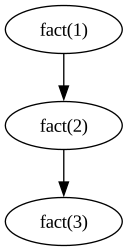
Eine solche einzelne lineare Aufrufkette kann einem Loop entsprechen. Deshalb hat der Compiler sie optimiert, um Stack-Speicher zu sparen.
Ein typisches Beispiel für Rekursion, die einem Loop entspricht, ist die Endrekursion, bei der die letzte Operation ein Selbstaufruf ist. Zum Beispiel:
void f(unsigned int x, int *a)
{
    if (x == 0) return;
    else
    {
        *a += x;
        return f(x - 1, a);
    }
}
Solche Rekursionen lassen sich nachweislich in äquivalente Schleifen umwandeln, daher optimiert der Compiler sie. Das obige fact()-Beispiel ist nicht endrekursiv, aber es ist trotzdem linear, und der Compiler hat das Muster erkannt, also wurde es ebenfalls optimiert.
fibonacci() ist jedoch nicht der Fall:
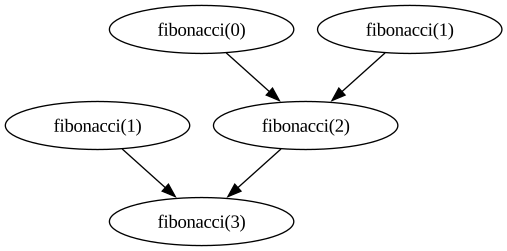
Die Aufrufbeziehung ist nicht linear. Sie ist ein Baum. Daher ist eine Umwandlung in eine Schleife nicht möglich; deshalb hat der Compiler das Rekursionsmuster beibehalten.